
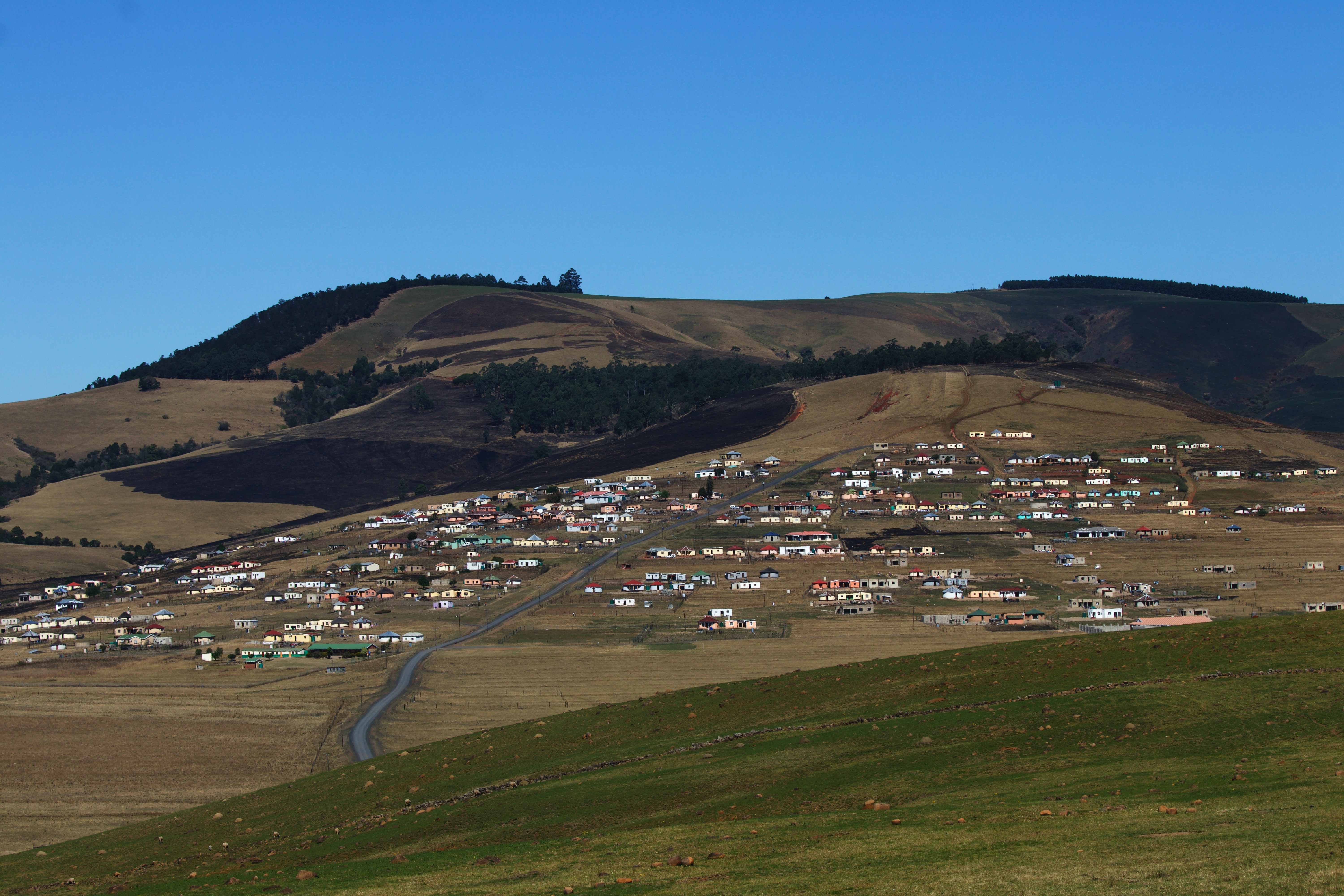
Landscape as an expression of culture.
Running has always been my way of exploring neighbourhoods. It’s a great way to experience any place—be it a city, a town, a nature reserve, or an oceanside. Running allows you to traverse areas without appearing creepy or suspicious or facing the all-too-familiar question, “Are you from around here?”
Coming from the Vhembe region, in a small township/village , the classification of this area foreshadows the discussions to follow regarding inherited classifications and their appropriate descriptions. My area is surrounded by four villages, and in the distance, the Soutpansberg mountain range is a sight to behold. This subtropical scenic region, with its mountains, is a great place to be a vegan. All this sounds like it should be a fantastic place to run, right? However, it’s not entirely so. Some parts, especially in the mountains, are amazing—offering elevation, greenery, and forest bathing that hits all the right notes. However, the densely populated areas are disheartening.
There are two issues I want to address regarding these densely populated areas: the lack of trees and plastic pollution.
I have been running this 5km route since I was 11. In earlier years, this path was flanked by forests, but 26 years later, those trees no longer exist. I understand populations grow, people need a place to live and build a life, and we can still have trees while we build our new homes and grow.
This route currently has so few trees that a 10-year-old would find it hard to believe a forest once thrived here. What does this say about us as a community, given that the landscape is a manmade system designed to serve us? Do we not value trees? A deeper inquiry arises: how did we reach this point where we fail to recognize the value of trees?
The phenomenon of losing trees seems to plague most South African townships, and it may be time for us to reassess our relationship with nature—or at least with trees. You might ask whether we ever truly valued trees.
For the Venda people, we have had, and continue to have, sacred sites called Zwifho. This might also hold true for many tribes in South Africa. Our natural landmarks signify a reverence for nature. The Venda people worshipped nature, and remnants of this belief can be seen in the Thathe Sacred Forest. We even had designated plant observers known as “Zwigomamutanda,” or herbalists, who were respected for their extensive knowledge of plants and their healing properties.
Growing up, I remember environmentalists being vigilant about the need to protect trees, and Abour Day was widely recognized. While it still exists, its significance has diminished over time. Our community has veered away from valuing nature, and this shift is no longer sustainable; the consequences of losing nature can no longer be dismissed as sensationalism—the threat is real.
The climate in this area has changed, further intensifying the need for trees. The heat in Venda is something one must experience to truly understand. We joke that we have two seasons—summer and summer lite. We typically average 40°C in summer and 30°C in “summer lite,” which we refer to as winter. So yes, it is hot! (A quick disclaimer, these “averages” may not be scientifically accurate, but they reflect our collective feelings about the region’s heat, however, the temperatures do frequently reach 40°C)
Studies show that trees have a natural cooling effect; they can reduce surface temperatures by between 11°C and 25°C and air temperatures by about 5.5°C. Trees are vital to our community and must become part of our culture again.
As if the lack of trees weren’t enough, the sight of plastic and waste littering this route—especially at intersections where people wait for public transport and near the business centre—is disheartening. The issue of municipal resources also merits investigation: are certain areas cleaner because they have the municipal resources to pick up trash, or do they have more bins available, making it easier for people to dispose of waste? There may be multiple factors to consider for understanding plastic pollution and other litter.
Nature is the most extravagant infrastructure we possess and living in the Vhembe region that is in the Vhembe Biosphere Reserve is a privilege. It is in our best interest to care for nature and understand it, as it will take care of us in return. We must reach a point where we learn to protect nature—starting with actions as simple as holding onto a used package until we find a bin and recognizing that we don’t need to cut down every tree around us.
Just imagine how lovely it would be to walk in a leafy township/village that isn’t littered with used packages, seeing the beautiful seasonal blooms of the various species of indigenous trees that grow in the area. Where even when it is 40˚C of heat it will feel like 30˚C and the streets won’t be lifeless for 8 hours of daylight. The presence of a tree canopy has so many social and economic benefits.
In conclusion, it’s time we reestablish our relationship with nature for the sake of our health and the planet. This is not just for people in the Vhembe region, but generally for all of us who live in townships, countrywide. The township also deserves to be called “the leafy township of…”, it deserves to be clean, and we should reclaim our reverence for nature.

Comments are closed.